Evidence and learning. A simulation that earns the name.
Lagewerk logs every decision, calculates its effect and delivers the complete evaluation on the same day. Whatever gaps it reveals, we then close with targeted training and e-learning.
For military and government training projects we run simulation-based training programmes and provide both the technology and the instructors. We transfer this experience into our Lagewerk simulation architecture and can therefore deliver high-quality command post exercises and crisis simulations for mid-sized companies and critical infrastructure operators.
EXERCISE
Your crisis management team works on a scenario from your sector, under time pressure and with an incomplete picture.
EVALUATE
The complete evaluation is handed over at the end of the exercise day. Not in four weeks. On the same day.
CLOSE
The gaps identified are closed in a targeted way, through classroom training or e-learning from our own platform.
No script
Classic command post exercises follow a fixed schedule of injects. The outcome is determined in advance, the participants simply do not know it.
Lagewerk has no fixed sequence. The situation develops from what your team decides and from what it fails to do.
The same starting position can end completely differently in two runs. The outcome is open, including downwards.
Who evaluates
The assessment is shared, not left to a trainer’s judgement.
Free-text decisions by the team are assigned to a measure type automatically.
The effect on the situation is calculated, not estimated.
The exercise management only intervenes to correct, and every correction is logged visibly as a counter-entry, never as a silent overwrite.
This makes the result reproducible without becoming mechanical.
Image 1: Decision timeline with effect calculation
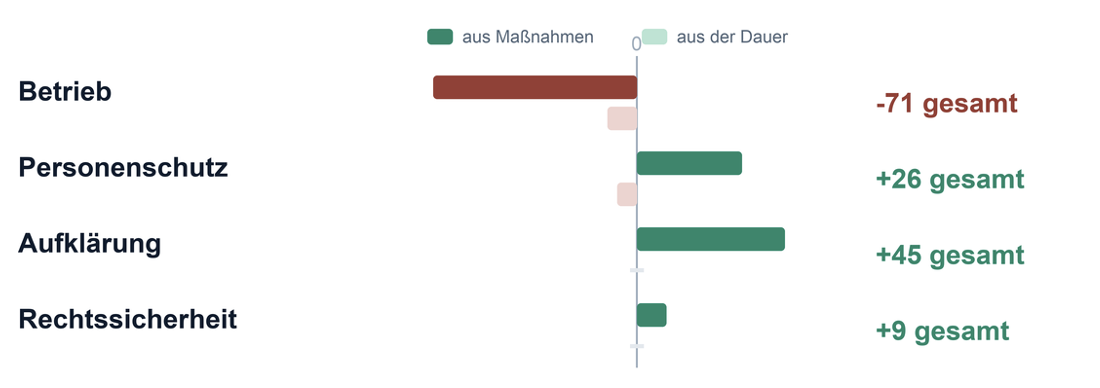
Image 2: Situation development and identified gaps
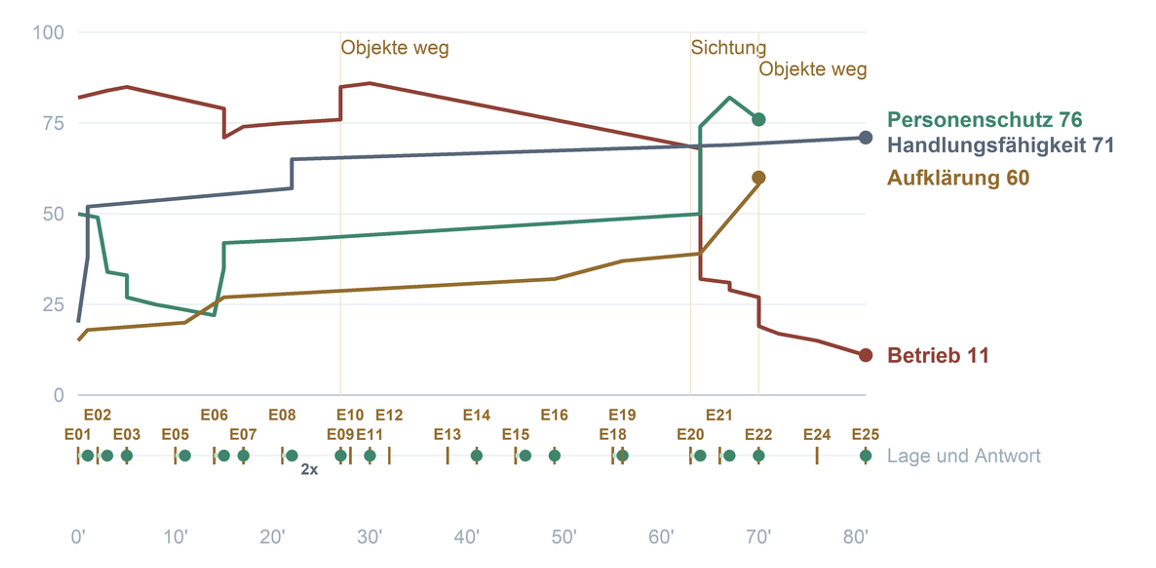
- 01Complete decision timeline with time stamps
- 02Effect calculation for each decision, traceable down to the individual measure
- 03Identified gaps in alerting, escalation, decision authority and information flow
- 04Each gap assigned to a specific qualification measure
- 05Documentation in auditable form
Mid-sized companies
You do not have a crisis management team. You have four people who have to decide when it matters.
In a production outage, an IT incident or a supply chain standstill, everyone looks to the management. The question is not whether a plan exists. The question is whether your leadership is able to act in the first hour.
What you will know afterwards:
Critical infrastructure
Regulators and auditors do not ask about the experience, they ask for the evidence.
The usual exercise ends with a feeling and a report that arrives six weeks later. By then the impression has faded, the participants are back in day-to-day business, and the insight drains away.
What you will have afterwards:
Request an exercise extract.
We will show you an anonymised decision chain with the corresponding effect calculation.